Sometimes you just have to laugh at the Auto-Attendant and On-Hold messages at some companies. I mean, who are they kidding? Is your call really “very important to us”?
The Caller
By Frank Halliwell
“Good morning! Thanks for calling us!
We’re pleased to hear from you!
Your call’s important to us
So we’ve placed you in a queue.
Please find your account number and
Be sure it is correct.
It’s twenty digits long and if you
Mis-type, I’ll reject.
I’ll lead you through the whole routine
Please use your touch type phone.
Press eight and follow with the hash
After you hear the tone.
If you are a new client here.
Press two, if old, press three.
Press four in case we’ve done something
With which you disagree!
You have pressed four, please wait a moment
While I transfer you.
And please enjoy, while we play you
A symphony or two!
Our staff are all too busy now
To talk to such as you.
Your call is so important that
We’ve placed you in a queue.”
Time passes and the music lingers
On, and bye and bye.
My cheek and ear go fast asleep,
My wrist gets R.S.I.
But wait! It may be there is hope!
I hear a ringing sound,
At last a human voice is heard
After the runaround!
“Good morning, this is Ladies wear
And may we help somehow?
Complaints?. Oh! Just hang on a tick
I’ll transfer you right now!…”
“Good morning! Thanks for calling us!
We’re pleased to hear from you!
Your call’s important to us
So we’ve placed you in a queue.
Recently I was researching the features of a customer’s phone system at the manufacturer’s website, and the manufacturer had this to say about its On-Hold message:
The InterStellar Phone System gives you the opportunity to have music playing while a caller is on hold. Best of all you can insert interruptions during each recording in order to play a message.
You’ve experienced this kind of On-Hold situation whether or not you remember it. You’re On-Hold, listening to the music or messaging, when all the sudden “click.” The music is interrupted, and hope springs up within you that your call is going to be answered. Only to have your hopes dashed by the message, “Your call is important to us; please continue to hold.”
Can you say, “Disappointment”?
I was On-Hold with a company last week that interrupted its On-Hold music with this reminder that I was On-Hold every ten seconds! Never do this to your callers.
Just because you use an Auto-Attendant doesn’t mean it has to be a poor caller experience.
Want to know what your caller’s experience is like? Try a Caller Experience Evaluation service. It’s like climbing inside your customer’s head and hearing your business from his perspective. Very informative!
A recent client who used this service, gave this feedback: “Thanks for getting the report to me as fast as you did. I will be correcting a lot of the concerns you pointed out. Thanks again!”
Don’t give your callers the run-around.


 Why the next thing you should do is pick up the phone.
 Chris Brogan
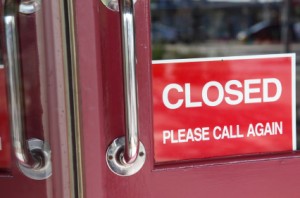 Having your phone system change the greeting when you’re closed is a very customer-friendly thing to do.
 Callers are going to get your voicemail at some time or another, and there are some specific things you can do on your greeting that will greatly help connecting with your callers!
 Use your name
 Use your own voice when possible
 Provide alternate means of connecting with you
 Change it frequently (daily)
 Set up your Auto-Attendant to repeat the greeting automatically, and if you can’t do that, select an option key for callers to press that will replay the message. Callers may miss the option they need the first time, and not realize it until later. Some systems automatically route the call to the operator if you don’t press anything. But don’t automatically route the call until after the message has repeated at least once.
 Always.
 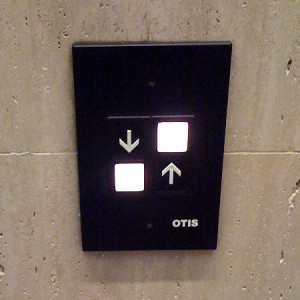 As I approached the elevators to head to my fourteenth floor hotel room recently, I was met with the elevator selector pictured here. Someone on the design team of this elevator company felt 100 percent positive that this selector was designed clearly so I would have no trouble at all in choosing whether I wanted to go up or down. You may think so as well.
 Facebook
 LinkedIn
 Twitter